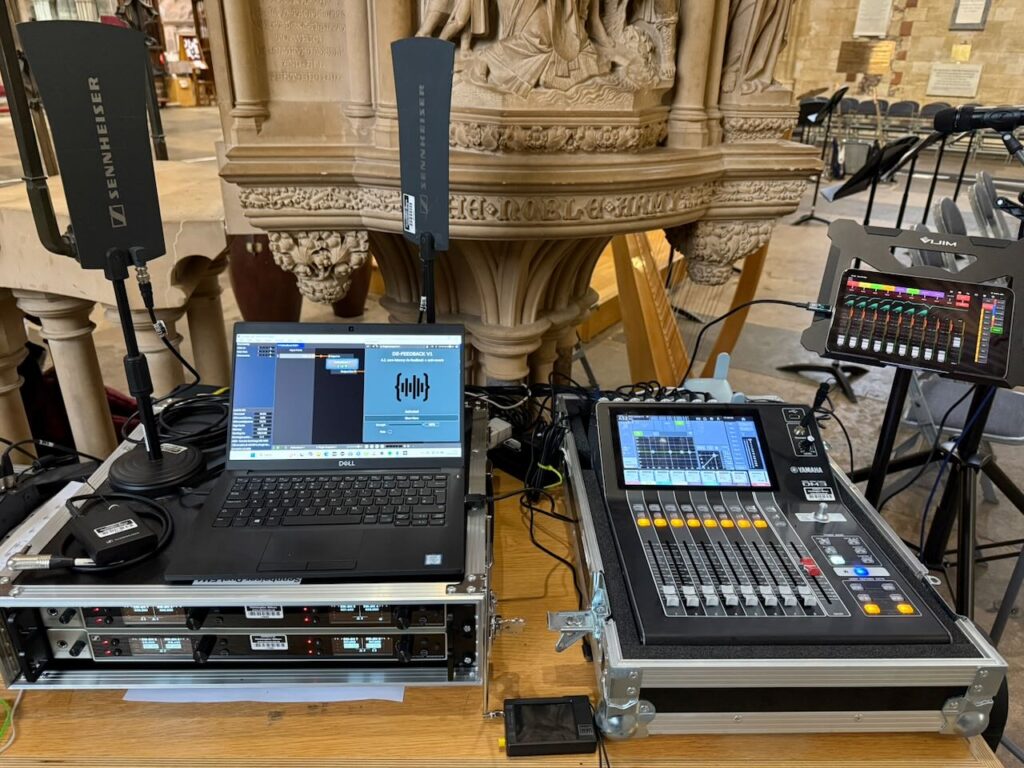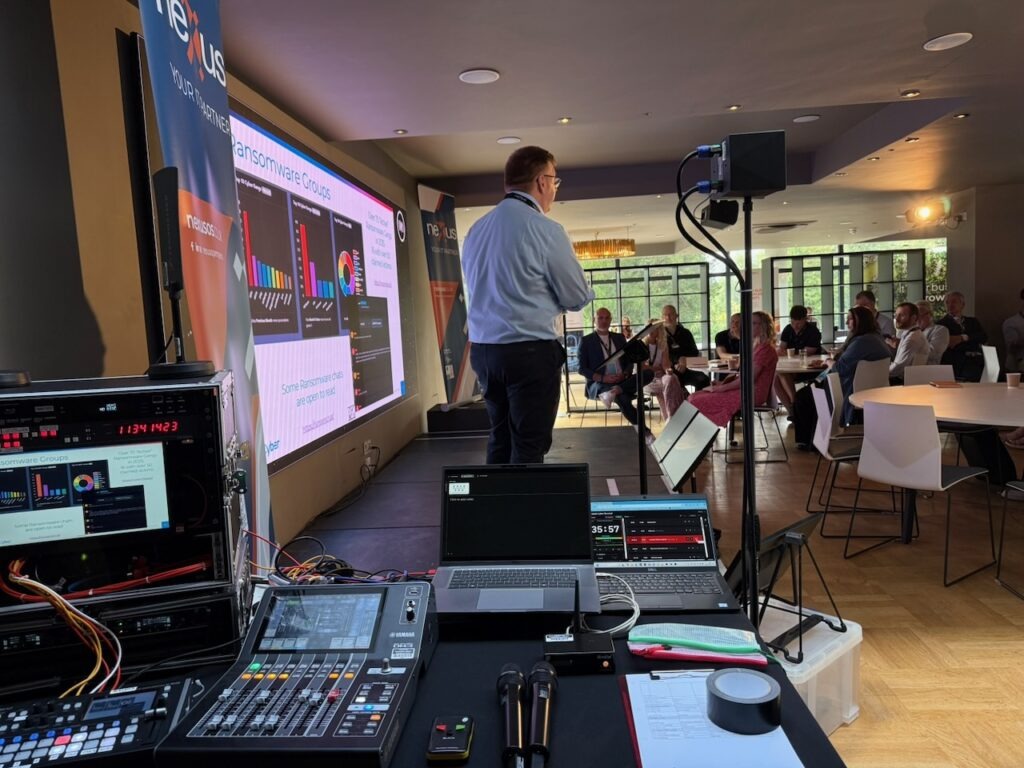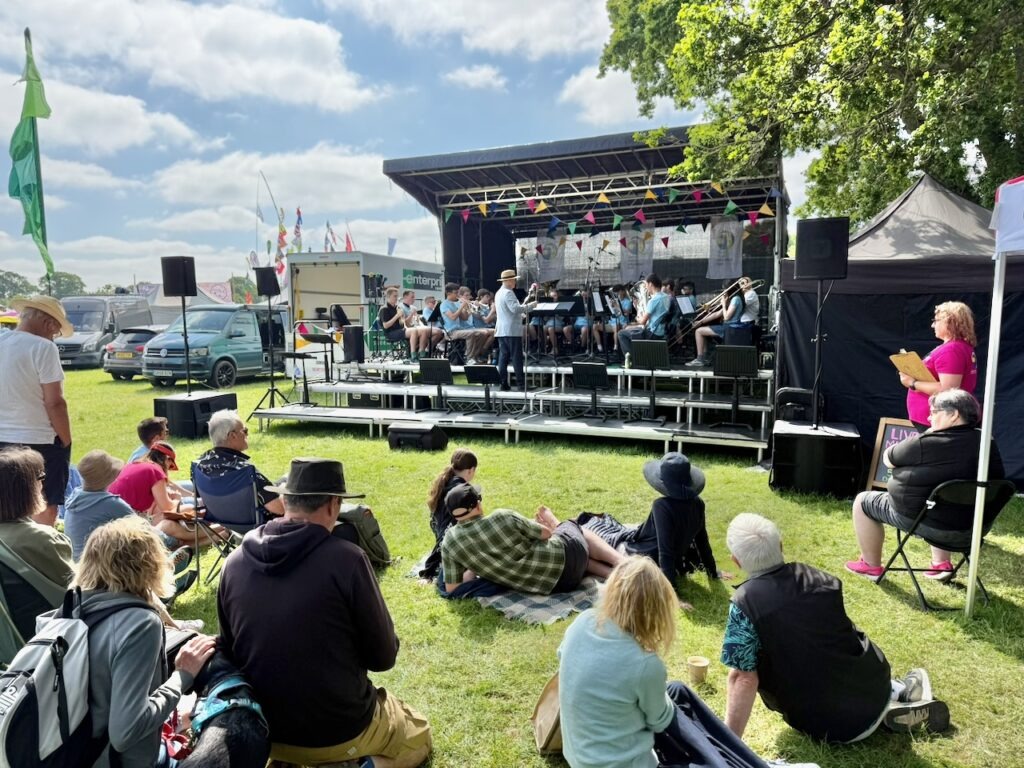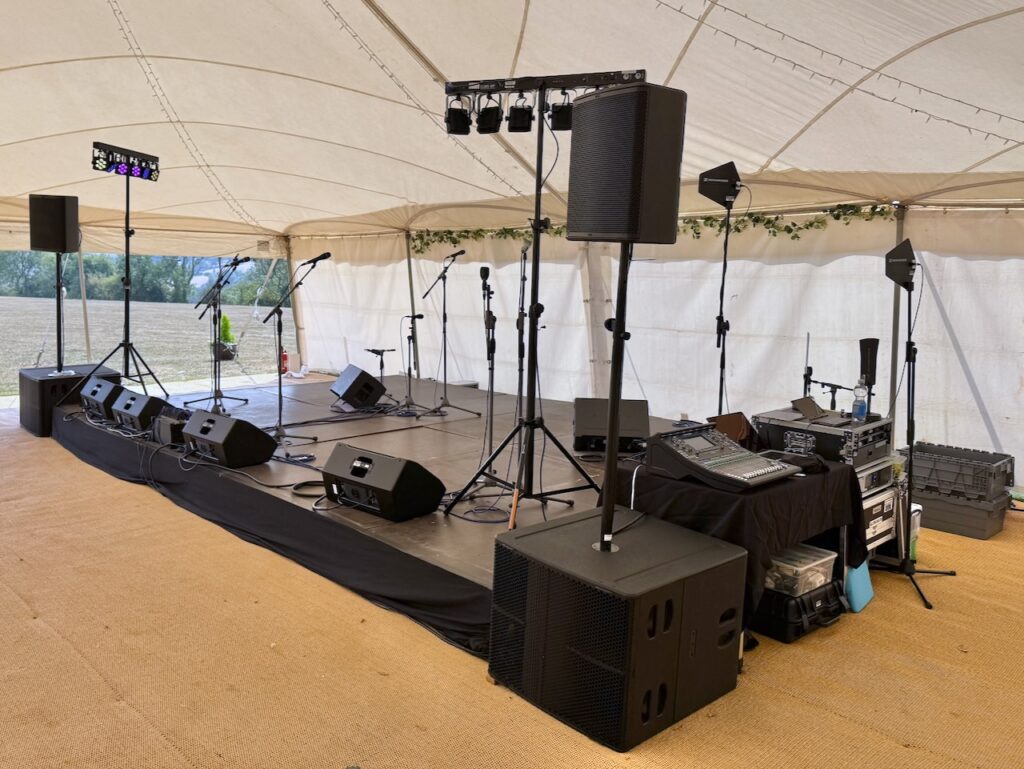
I’ll answer this in a personal context for the sound engineering work that I do, but much of this will be generically applicable to other live sound engineers and live sound production companies hired to provide PA services for live music.
My example scenario is for a function band at a venue such as a hotel ballroom. It doesn’t vary much for, say, a wedding or festival (maybe timing). Conference work is quite similar, but instead of a band, there will be talks and presenters with their requirements which might be a bit more AV-oriented.
Hiring a sound engineer involves far more than the hours you see on the day. This page walks through everything that goes into a professional gig booking — from the ongoing business overheads that keep the service sharp, through advance planning, venue prep and sound check, to the derig and reset afterwards. What you’ll see if you add up all the time is that the actual performance is quite a small part of the effort!
Underpinning it all is a broad base of technical and industry knowledge built up over years — covering audio engineering, systems design, electronics, event production and customer service.
The Lifecycle of a Gig Booking
Before Your Booking
Before you’ve booked me, I’ve been managing my sound business and there are ongoing overheads which benefit every gig.
- Doing everyone else’s gigs and honing my craft
- Maintaining, testing and updating the firmware/software in the equipment
- Buying/making leads and configuring the equipment into cases and sets for fast deployment
- Insuring, licensing etc.
- Staying in touch with industry trends and practices
- Rotating and upgrading my equipment to continuously improve my offering
- Marketing and maintaining a presence, like this website
The Booking
For repeat customers, rebooking can be very quick. Otherwise, I may invest an hour to a few hours here, even if I don’t win the bid.
- Replying to enquiries with follow-up questions
- Providing advice by phone or email
- Attending a site meeting
- Determining a suitable service package and providing pricing
After You’ve Booked
These are the advance tasks before a gig. The universal tasks are the liaison and research, which could easily be an hour or more for an unfamiliar band and venue. Something like a small festival will require a lot more unless there’s someone else working on the production team doing band liaison.
- Liaising with the band about technical requirements (sometimes this happens before booking)
- Finding websites and social media showing the band and how they set up, perform and sound
- Making notes on the requirements and details so I can review them later
- Booking any required sub-hire equipment
- Making or buying equipment or cabling particular to this gig (this is usually re-usable)
- Booking any required transport hire
- Booking any required extra labour
In The Week Up to the Gig
This advance prep is an hour to a few hours. Time invested here saves time on the gig day, which can be essential if the pre-show time at the venue is only a couple of hours. This work also serves to reduce risk and surprises by doing considered planning for verified requirements.
- Reviewing my notes on the gig
- Revisiting any media which remind me about the music, playing, layout etc. of the band
- Checking in with the band and/or customer about timing and make sure everything is still on
- Checking with the venue about access times and locations, if necessary
- Making a channel plot for the inputs to the mixer/stage boxes and print it
- Advance configuring any equipment where time could be saved on the day, e.g. mixer settings, radio mics
- Creating a packing list for the van that covers the gig requirements and contingency extras
In the 24 Hours Before the Gig
Assembling and packing all the required paraphernalia needs to be done with care, since there’s usually no option to go back for anything that’s been forgotten. I usually check and double-check!
- Gathering all the required equipment, accessories, files, print-outs and packing the van
- Preparing practical things like food, coat, uniform, hot weather gear, safety boots etc. according to the job
A Few Hours Before the Gig
Journey time! Commonly I need to be start well before the band.
- Setting off with time to spare, especially with long journeys, new locations and busy locations
On Arrival at the Venue
(These next three sections are typically the kind of things I cover in my sound engineering lessons, which where you can see an example list of sound equipment skills.)
This on-site prep is normally the most intense phase and often takes a minimum of 90-120 minutes for a full band. Occasionally it’s compressed even more than this, which requires fast work, no distractions and can be very pressured if there’s any troubleshooting to do.
- Locating key venue personnel
- Identifying and accessing the load-in route for the equipment
- Checking venue policies and rules on access times, times when noise can be made, noise limits, room lighting, emergency exit spacing, running cables etc.
- Finding adequate and working sources of power
- Loading all the technical equipment in to the venue (this can be quite physical, a few hundred kilos of gear)
- Determining the best layout for the PA and mixing position for the best band and audience experience, within venue constraints.
- Moving all the equipment into location and cabling it for power and signal. PA speakers, amplifiers, monitor speakers, sound desk, input boxes, feeds to other systems, mics and mic stands, DI boxes, stage power, Wi-Fi, control. There could be 50-100 cables for the sound rig alone.
- Testing the front-of-house PA and making sure all parts are working, the tone is right and the coverage is right. Adjusting as needed.
- Testing the floor monitors
- Testing any feeds to other systems, e.g. in-house systems, cameras, etc.
Band Load-In and Sound Check
I like at least one song to sound check, and more than that if vocals, instrumentation or arrangements are significantly varied between songs. Several songs will allow a better balanced mix to be built up ready, which seems only fair if there’s an audience here for this specific band.
- Meeting the band and relevant event organisers.
- Sharing any relevant information learned about the event, timing, venue etc. that may be pertinent.
- Asking the band about any on-the-day changes, intro plans, special solos etc.
- Liaising with the band about available power and connecting in their instruments.
- Line-checking each microphone/instrument and dial in a first pass of sound settings (gain/level, high-pass filter, EQ/tone, compression and gating as needed)
- Starting monitor mixes for the band members
- Running sound-check songs with the band, refining the front-of-house mix and the monitor mixes
At Showtime
Showtime requires concentration. Only a minority of bands adjust their own dynamics moment-to-moment so that that mix doesn’t need adjusting across their set. Even then, there’s usually opportunity to refine the mix since sound check. Most bands play differently to their sound check once the adrenaline has kicked in with a crowd, although the most professional of musicians will stay consistent.
- Executing any plans and requests agreed with the band re. intros, solos etc.
- Constantly listening to the balance of the mix and refining it
- Tracking solos and leads as the songs change, and bringing those forward as needed
- Updating the settings on individual channels as needed to improve their contribution to the mix
- Changing reverb and delay settings to suit the songs, and stopping them between songs
- Tracing and addressing feedback, crackling or noise if it arises
Derig After the Show
An hour is quick for a derig. It often takes a couple of hours.
- Repacking all the microphones, mic stands, mixer, radio mics, PA, etc. into their cases, crates and racks
- Coiling all the cables in the correct fashion
- Shuttling all the equipment back to the van
- Reloading the equipment securely into the van
Back at My Premises
It’s not fully over until everything’s reset and back where it lives.
- Unloading and storing all the equipment
- Cleaning anything that got dirty
- Resetting anything that had its configuration altered
- Testing or repairing anything that had issues during the gig
- Getting feedback and requesting reviews
Sound Engineering Skills and Knowledge
Above, I’ve listed the sequence of tasks to accept and deliver a sound system service.
The actual engineering and industry knowledge I’ve built up as a sound engineer and live events professional covers these bases and more:
- Communications electronics knowledge – how analogue and digital signals are carried over wired and wireless systems, how signal chains work, metering, measurement, measurement units, what’s normal, noise, distortion, reliability, frequency response, balanced signals, connector types, and problem solving.
- Audio engineering knowledge – frequency range of different audio sources, equalisation/tone to get a desired sound, dynamic range and how to configure compressors and gates, microphone choice and positioning, microphone technique, performers’ typical needs, groups and DCAs for mixing, input and output routing, building a front-of-house mix, building a monitor mix etc.
- Systems engineering knowledge – correct gain structuring for a sound system, for a given job: suitable scaling of a system, power supply requirements, choice of speakers, number and layout of speakers needed, speaker rigging, suitable crossover frequencies, amplifier configuration and monitoring, system equalisation, level measurement, best ways to run cables
- Sound industry knowledge – knowing what everything is for and how it connects, knowledge of all the cable types and connectors, awareness of different sound equipment brands and their capabilities, general knowledge as to how all PA systems work and how to connect with them, knowledge of the requirements and interfacing with other fields such as video and lighting
- Event industry knowledge – conventions for working with bands/conference organisers/venue staff/stage managers/performers, safety requirements and procedures, risk assessments, event planning roles, radio communications, correct lifting practice, etc.
- Customer service knowledge – how to be supportive and reassuring, empathetic listening, remembering and prioritising requests, sharing information, anticipating problems before they happen, thinking of solutions to problems.
Conclusion
Hopefully this post has given you an insight into the skill and value brought by hiring a sound system from a sound company.
If you’d like to hire me for your event in the south west of England, you can see some example prices and contact me to discuss your event.